It has been 6 years since Artur and Margaret Rojsza began remodeling their two-story farmhouse at 2147 Main Street by lifting it several feet above its original foundation. Since then, the project has landed the Rojszas in court time and time again. This week saw another of those times.
Even though they were appealing a recent judgement handed down in Superior Court, the Rojszas never sought a stay of the court’s order which meant the deadlines and consequences of missing them remained in force. After those deadlines had passed, the city filed a motion with the court this month asking the penalties for missing them be enforced.
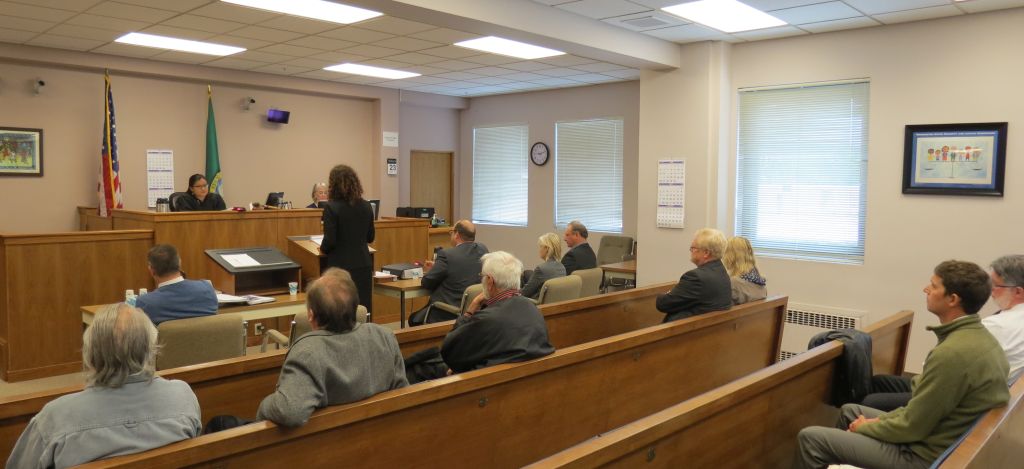
This week, the court heard arguments regarding the city’s latest motion. The city was asking for the court to finally employ the penalties defined in the February 2015 agreement. “It appears that anything that has been done to date has had little impact on them,” noted Ferndale City Attorney Dannon Traxler. The city’s attorney pointed to years of failing to comply with the city’s and the courts’ authority.
The Rojsza’s attorney, Peter Dworkin, said his clients had been delayed while awaiting “instruction and understanding from the city” on how to proceed after the most recent settlement. Dworkin said the city also imposed requirements that created more delays, such as requiring an engineer to do inspections but the Rojsza’s engineer was unavailable at the time. Dworkin also pointed out the Rojszas are building contractors who take on projects that require being out of town for days and weeks at a time.

Click for more information

Click for more information

Superior Court Judge Raquel Montoya-Lewis told the attorneys for both sides, “Our collective goal is to get this done. The question is how to get there. We [both sides] have polar opposite views of how to do that.” Montoya-Lewis told the Rojszas she understands they have been working many hours a day between their contracting work and working on their residence to comply with the order. She also noted, “You have made the choices you’ve made, and you have a right to do that, but the city is responsible to make sure you do that in accordance with the code.”
Montoya-Lewis ruled the penalties and fines sought by the city would be suspended for now, with the exception of compensation for the city’s attorney’s fees incurred to bring the current motion to court. The Rojszas have another 60 days to complete the remaining items on the judgement order from February 2015 and are not allowed to ask for any further changes or deviations from the city.
Dworkin pointed out that a spire on the clock tower portion of the building is planned and a permit for it has been issued by the city. This ruling, according to Dworkin, would mean completing the clock tower roof to satisfy the order and then tearing it off in order to build the planned spire. Attorneys for both sides agreed to a short recess and went back and forth between their clients to reach an agreement on how to proceed.
After court returned from recess, Traxler asked that the roofing and some other related elements be assigned a 120-day deadline, twice what the court was original ordering. She noted it was not the city’s position that the Rojszas construction plan for the spire was the best alternative but they were accommodating it in order to keep the process moving forward.

Click for more information

Click for more information
The court order also included, in the event the Rojszas were unable to meet these new deadlines, a $500 per day penalty.
A status hearing will be scheduled for approximately 30 days from the date of this court order to review the Rojszas’ progress.
In February 2015, the City of Ferndale and the Rojszas came to an agreement over what needed to be done and by when it would be done in order to complete the major remodel and be in compliance with city and international building codes. But by November, after the deadlines agreed to had passed, the city filed a motion with the court asking that the penalties stipulated in the agreement be authorized since several of the deadlines had not been met.
The parties returned to the courtroom almost exactly one year after the agreement had been set. The court gave the Rojszas another 90 days to either obtain variances from the city or finish construction of the exterior per previously submitted plans and the settlement agreement.
Discover more from Whatcom News
Subscribe to get the latest posts sent to your email.