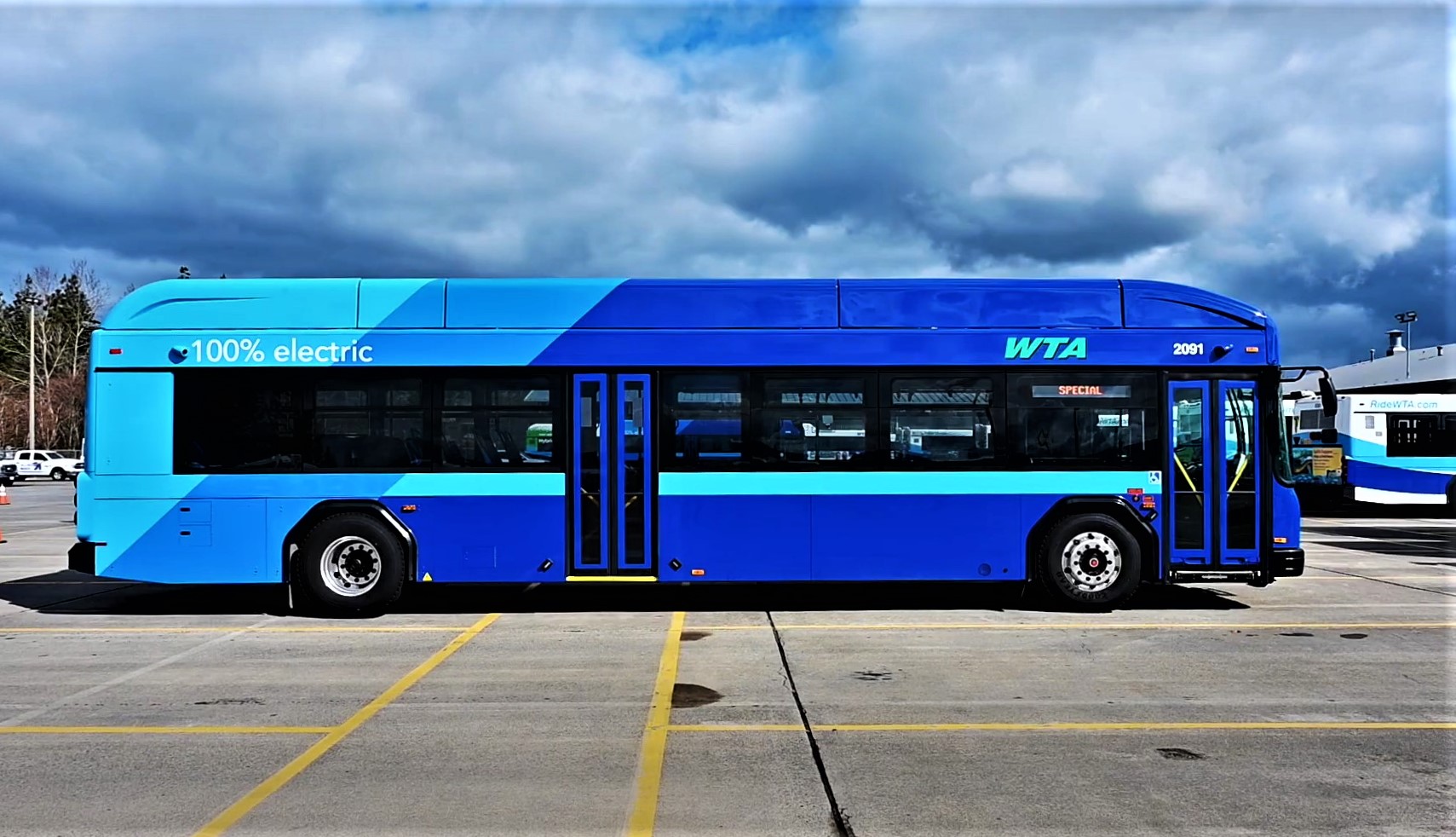
WHATCOM COUNTY, Wash. — US Senator Maria Cantwell of Washington, Chair of the Senate Committee on Commerce, Science and Transportation, announced yesterday, August 12th, more than $10 million in competitive federal grants from the Department of Transportation (DOT) have been awarded to 2 Whatcom County organizations. Only 150 of 530 grant applicants nationwide were awarded funding.
- $8,862,951 to Whatcom Transit Authority (WTA) to be used to replace aging diesel buses with new electric ones
- $1,876,265 to Lummi Nation to be used to build a new bus maintenance facility
The WTA grant comes from DOT’s Low or No Emission (Low-No) Grant Program. The program supports the transition of the nation’s transit fleet to the lowest polluting and most energy efficient transit vehicles. The Low-No Program provides funding to state and local governmental authorities for the purchase or lease of zero-emission and low-emission transit buses, including acquisition, construction and leasing of required supporting facilities.
WTA reported last September that the cost of an electric bus would be just over $1 million, about $400,000 more than a comparable diesel bus.
According to a WTA press release, “Once these buses enter service in 2024, 12 of WTA’s 62 fixed route buses will be electric. WTA’s goal is to convert to 100% zero emission vehicles no later than 2040.”
The Lummi Nation grant comes from DOT’s Bus and Bus Facilities Grant Program. The program assists in the financing of buses and bus facilities capital projects, including replacing, rehabilitating, purchasing or leasing buses or related equipment, and rehabilitating, purchasing, constructing or leasing bus-related facilities.
Electric bus and truck manufacturer Vicinity Motor Corp (VMC) of Aldergrove, British Columbia, is preparing to begin production in their a planned $22 million assembly facility in Ferndale. The company announced last year that the State of Washington had placed their products on a statewide purchasing contract that enables state transit agencies to purchase from VMC. The facility is reportedly capable of producing 1,000 electric, CNG, gas and clean-diesel vehicles annually.
Discover more from Whatcom News
Subscribe to get the latest posts sent to your email.