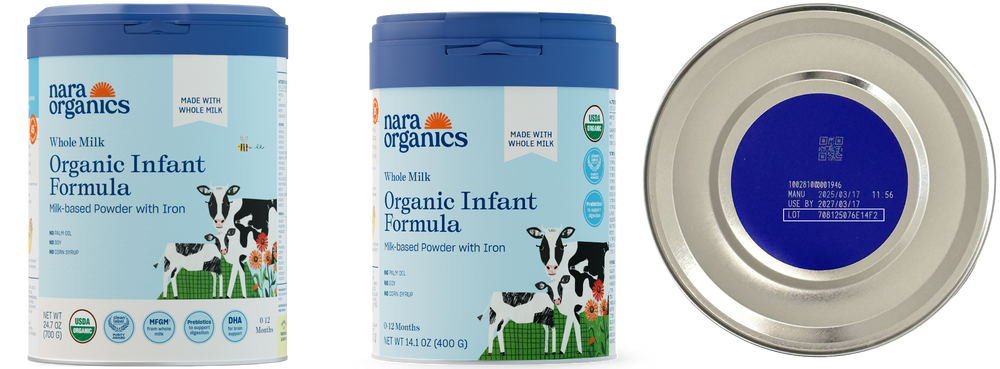
On June 13, 2026, the Centers for Disease Control and Prevention (CDC), the Food & Drug Administration (FDA), in collaboration with the California Department of Public Health (CDPH), Infant Botulism Treatment and Prevention Program (IBTPP) are investigating a multistate outbreak of three confirmed or suspected infant botulism illnesses.
As of June 13, 2026, a total of 3 infants with infant botulism have been reported in this outbreak from 3 states: California, Pennsylvania, and Washington.
Although infant botulism is potentially fatal, no deaths have been reported to date. Several infants remain hospitalized.
The health of all babies is our first priority, and for that reason, we’re issuing a voluntary recall for all cans of Nara Organics infant formula currently available in the U.S.
Advertisement
Click for more informationAdvertisement
Click for more informationStop using all Nara Organics infant formula immediately.
We are heartbroken for the concern and stress this may cause your family.
Late on Friday June 12, 2026, the FDA provided epidemiological information to us of 3 cases of infant botulism in babies who the CDC reported had consumed Nara infant formula. As of today, no Nara formula has tested positive for C. Botulinum.
Nara Organics (June 14, 2026)
Advertisement
Click for more informationAdvertisement
Click for more information




All lots currently on the market are included in this voluntary recall. The lot code can be found on the bottom of each can.
Infant botulism is a rare illness where spores of Clostridium botulinum bacteria colonize and grow in an infant’s large intestine. These bacteria release a neurotoxin that causes symptoms like constipation, weakness (especially in sucking, crying, and swallowing), and loss of muscle tone. If untreated, the condition can lead to paralysis, trouble breathing, and death.
Affected infants have difficulty with feeding and often with breathing. However, in the absence of other complications, infants recover completely from the disease.
Washington has an average of 4 cases of infant botulism annually. Most affected infants are 6 months or younger, although cases can occur until the first birthday. Spores are widely distributed in the environment and specific exposures are rarely identified. Identification of a contaminated commercial product, as in the current situation, is rare. Honey can contain spores so infants should not be fed honey or foods containing honey.
Discover more from Whatcom News
Subscribe to get the latest posts sent to your email.