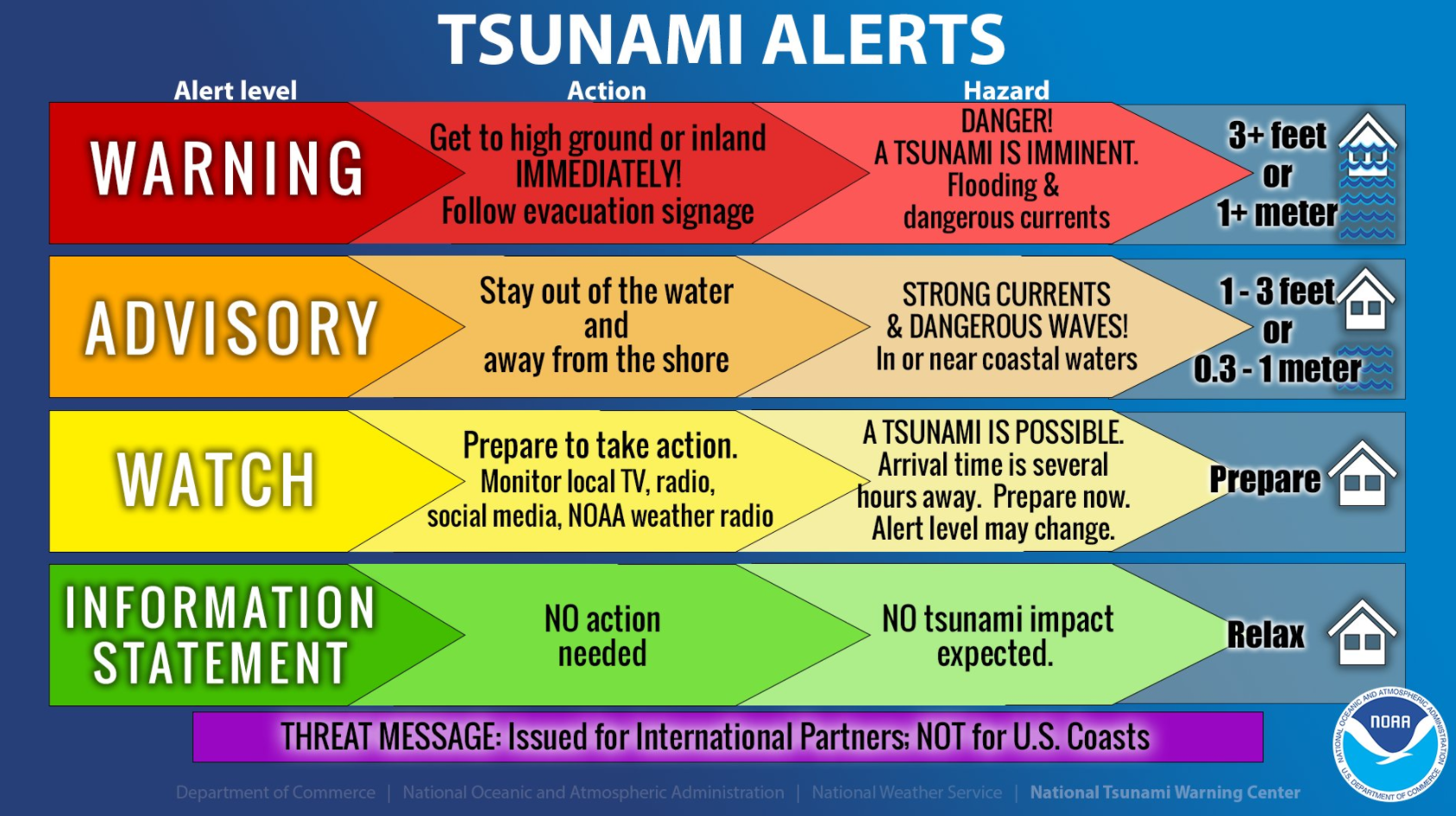
UPDATE: 6:30pm – The watch has been upgraded to an advisory and the forecast maximum tsunami height at Bellingham is less than 1 foot.
Original Story
About 5:19pm (Pacific Time) on Tuesday, July 29, 2025, a tsunami statement was issued for the Pacific coastal regions of British Columbia, Washington, Oregon and California by the NOAA/National Weather Service US Tsunami Warning System after an M8.7 earthquake had been detected about 4:25pm off the coast of Russia, 80 miles SE of Petropavlovsk, Kamchatka, in the western Pacific Ocean.
The earthquake was reported at a depth of 46 miles.
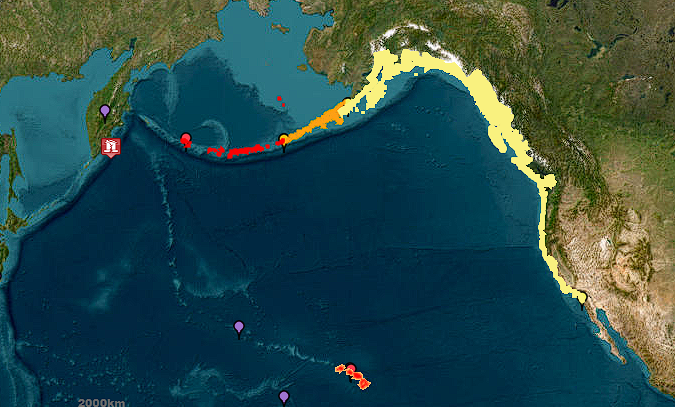

In the statement, a tsunami watch was issued for the Alaska, British Columbia, California and Oregon coasts.

Click for more information

Click for more information
Estimates place the start of any potential tsunami as follows.
Alaska
Shemya 1640 AKDT Jul 29
Adak 1740 AKDT Jul 29
Unalaska 1845 AKDT Jul 29
Saint Paul 1855 AKDT Jul 29
Sand Point 1925 AKDT Jul 29
Cold Bay 2000 AKDT Jul 29
Kodiak 2020 AKDT Jul 29
Seward 2045 AKDT Jul 29
Elfin Cove 2050 AKDT Jul 29
Yakutat 2055 AKDT Jul 29
Sitka 2055 AKDT Jul 29
Valdez 2105 AKDT Jul 29
Cordova 2115 AKDT Jul 29
Homer 2140 AKDT Jul 29
Craig 2155 AKDT Jul 29
British Columbia
Langara 2205 PDT Jul 29
Tofino 2330 PDT Jul 29
Washington
La Push 2335 PDT Jul 29
Neah Bay 2340 PDT Jul 29
Long Beach 2345 PDT Jul 29
Moclips 2350 PDT Jul 29
Westport 2355 PDT Jul 29
Port Angeles 0020 PDT Jul 30
Port Townsend 0045 PDT Jul 30
Bellingham 0110 PDT Jul 30
Tacoma 0200 PDT Jul 30

Click for more information

Click for more information
Oregon
Port Orford 2340 PDT Jul 29
Charleston 2345 PDT Jul 29
Brookings 2350 PDT Jul 29
Seaside 2355 PDT Jul 29
Newport 2355 PDT Jul 29
California
Fort Bragg 2350 PDT Jul 29
Crescent City 2355 PDT Jul 29
Monterey 0015 PDT Jul 30
Port San Luis 0035 PDT Jul 30
San Francisco 0040 PDT Jul 30
Santa Barbara 0050 PDT Jul 30
Los Angeles Harb 0105 PDT Jul 30
Newport Beach 0110 PDT Jul 30
Oceanside 0115 PDT Jul 30
La Jolla 0115 PDT Jul 30
Additional guidance from US Tsunami Warning System:
IMPACTS
-------
Impacts will vary at different locations in the warning and
in the advisory areas.

If you are in a tsunami warning area;

 * A tsunami with damaging waves and powerful currents is
   possible.

 * Repeated coastal flooding is possible as waves arrive
   onshore, move inland, and drain back into the ocean.

 * Strong and unusual waves, currents and inland flooding
   can drown or injure people and weaken or destroy structures
   on land and in water.

 * Water filled with floating or submerged debris that can
   injure or kill people and weaken or destroy buildings and
   bridges is possible.

 * Strong and unusual currents and waves in harbors,
   marinas, bays, and inlets may be especially
   destructive.

If you are in a tsunami advisory area;

 * A tsunami with strong waves and currents is possible.

 * Waves and currents can drown or injure people who are
   in the water.

 * Currents at beaches and in harbors, marinas,
   bays, and inlets may be especially dangerous.

If you are in a tsunami warning or advisory area;

 * Some impacts may continue for many hours to days after
   arrival of the first wave.

 * The first wave may not be the largest so later waves may
   be larger.

 * Each wave may last 5 to 45 minutes as a wave encroaches
   and recedes.

 * Coasts facing all directions are threatened because the
   waves can wrap around islands and headlands and into bays.

 * Strong shaking or rolling of the ground indicates an
   earthquake has occurred and a tsunami may be imminent.

 * A rapidly receding or receded shoreline, unusual waves and
   sounds, and strong currents are signs of a tsunami.

 * The tsunami may appear as water moving rapidly out to sea,
   a gentle rising tide like flood with no breaking wave,
   as a series of breaking waves, or a frothy wall of water.
Discover more from Whatcom News
Subscribe to get the latest posts sent to your email.